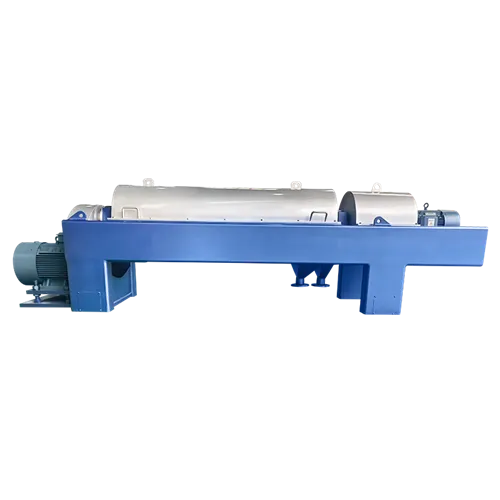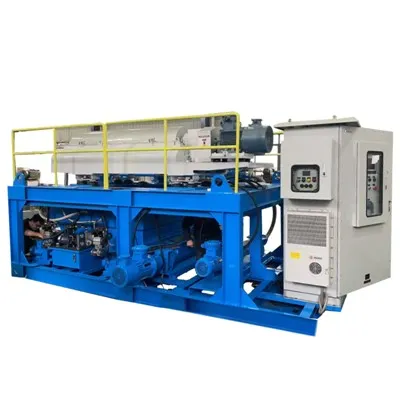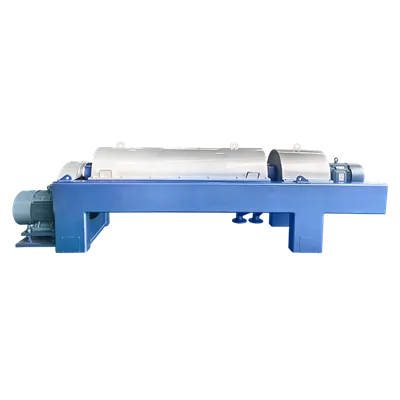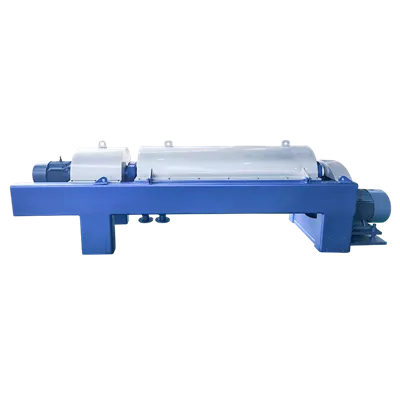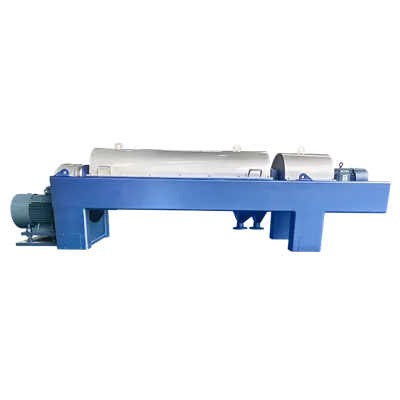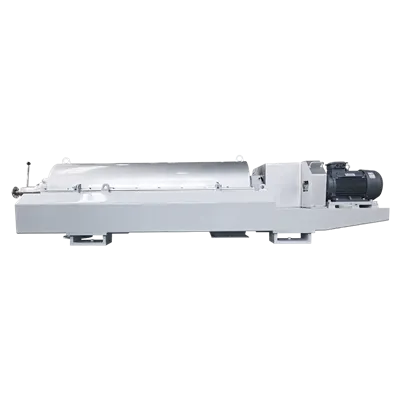
Although all are called centrifuges, several common types have emerged based on their specific structures and separation requirements:
Horizontal Screw Centrifuge: This is currently the most widely used type. Its drum is horizontal, with an internal screw propeller rotating at a slightly different speed. During rotation, the screw propeller continuously pushes the solid particles deposited on the inner wall of the drum towards the discharge port, while the clear liquid is discharged from the overflow port at the other end, achieving continuous feeding and discharging, high automation, and large throughput.
Disc Centrifuge: Its drum contains a stack of conical discs, which greatly increase the settling area, making it particularly suitable for separating liquid-liquid-solid three-phase mixtures with very fine solid particles or small density differences. It is used in applications requiring high separation precision.
Tube Centrifuge: Its drum is long and slender like a tube, rotating at very high speeds and generating extremely strong centrifugal force fields. It is mainly used for separating highly difficult-to-separate emulsions or capturing trace solid particles.