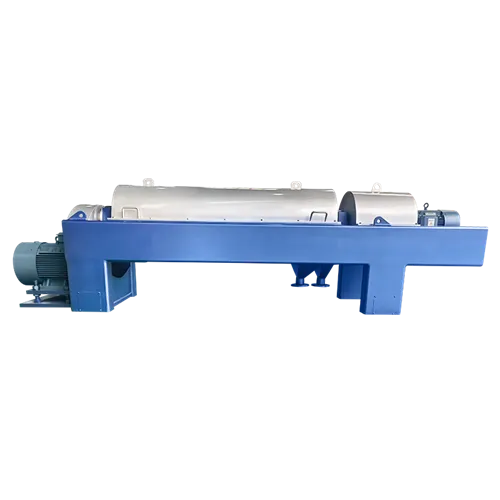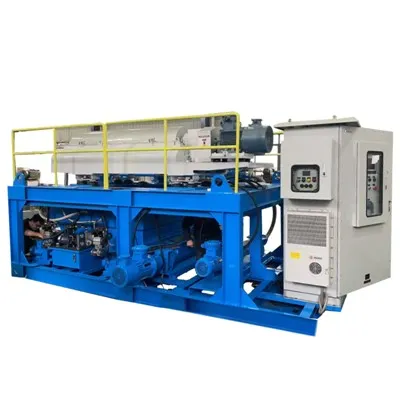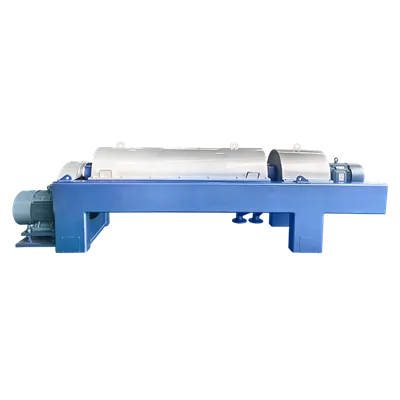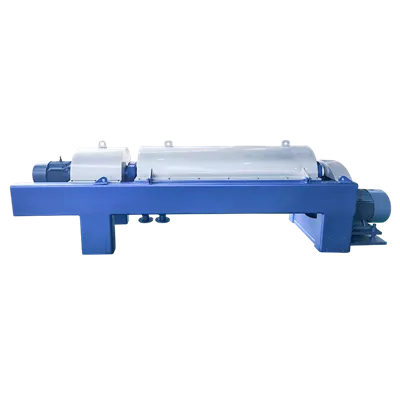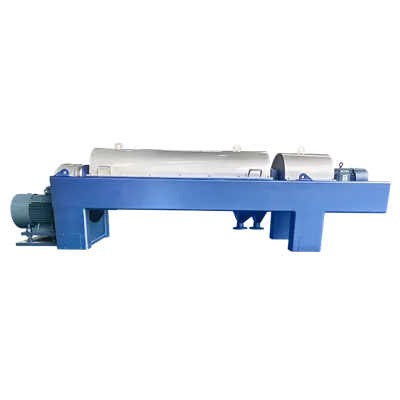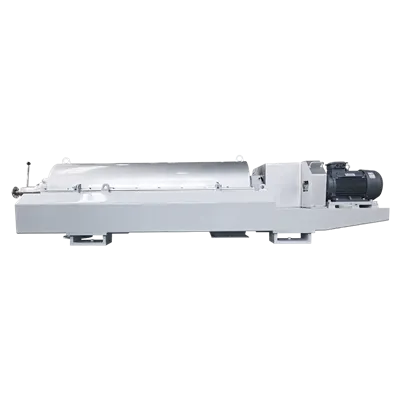
Centrifugal dewatering machines mainly consist of a rotating drum and a screw conveyor with a hollow shaft. Sludge is fed into the drum through the hollow shaft and separated under the centrifugal force generated by high-speed rotation. The sludge particles, being denser, adhere to the inner wall of the drum, forming a solid layer; water, being less dense, forms a liquid layer inside the solid layer. The solid sludge layer is slowly propelled by the screw conveyor to the conical end of the drum for discharge, while the liquid overflows through a weir.
The rotating drum (or hub) is a key component; its larger diameter results in greater dewatering capacity. Rotational speed is an important control parameter, affecting solids content and energy consumption. Industrial centrifugal dewatering machines are available in various models based on capacity; for example, drum diameters range from 500mm to 1500mm, corresponding to maximum capacities from 25kg to 500kg, spindle speeds from 700r/min to 960r/min, and motor power from 1.5kW to 11kW.