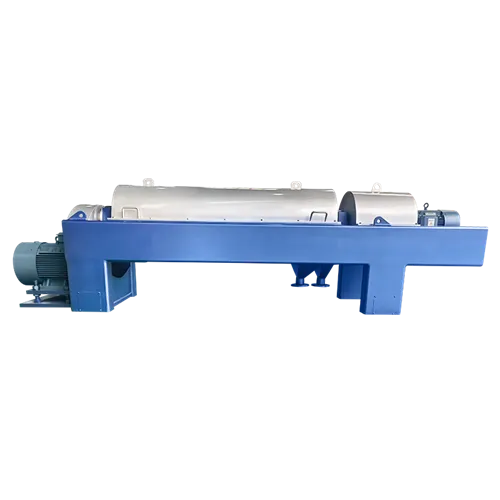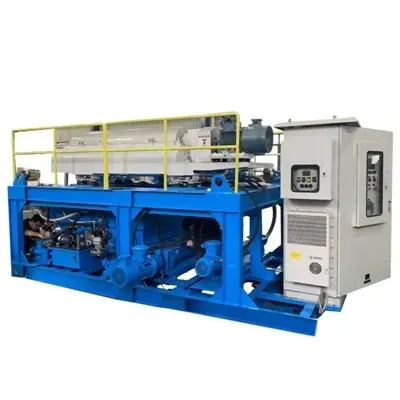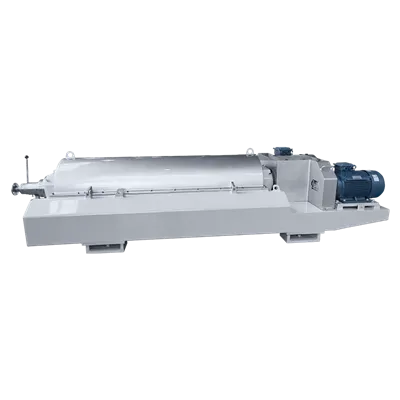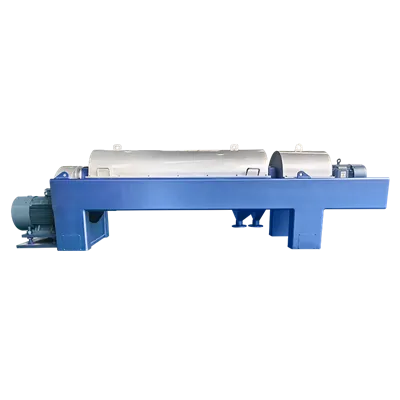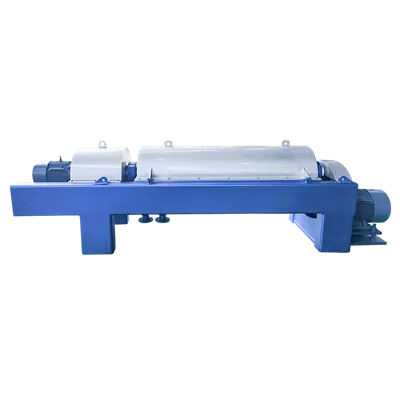
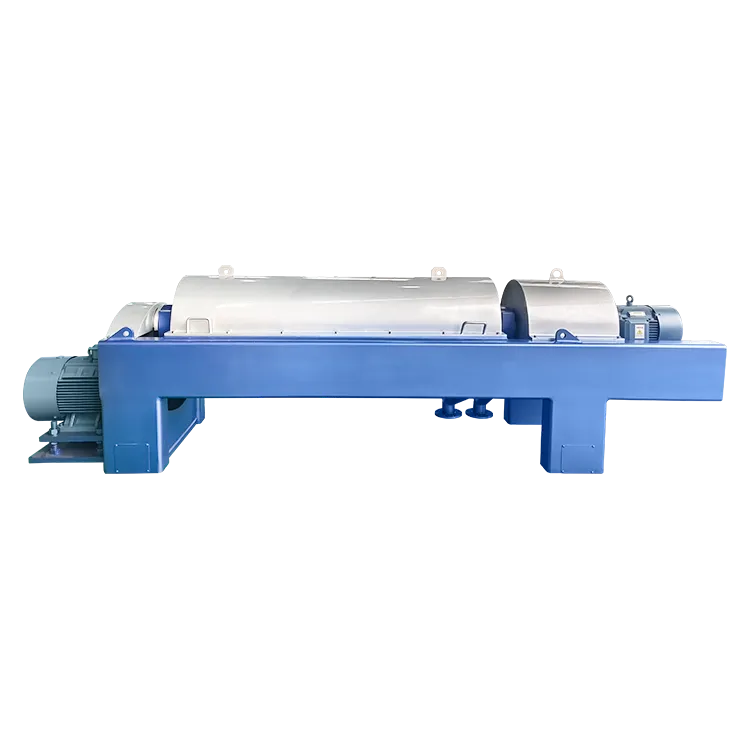
Decanter centrifuge machine, also known as horizontal spiral discharge sedimentation centrifuge, is an industrial device that achieves efficient solid-liquid separation based on the principle of centrifugal sedimentation. It has been widely used in many fields, including wastewater treatment, chemical production and wastewater treatment, food processing and wastewater treatment, pharmaceutical production and wastewater treatment, mining tailings, livestock and poultry manure treatment in the breeding industry, energy industry, steel products, freshwater industry, agriculture, papermaking, and brewing industry.
Lishui Yuanrong Environmental Protection Equipment Co., Ltd. provides high‑efficiency decanter centrifuge machines designed for continuous, high‑capacity solid-liquid separation. Our decanter centrifuge machines combine advanced centrifugal sedimentation technology with targeted designs for different material requirements across various industries, reducing sludge volume through efficient separation.
Decanter Centrifuge Machine
In the demanding field of wastewater treatment, equipment efficiency directly determines operating costs. Our decanter centrifuge machines feature targeted structural designs for materials from different industries, greatly improving separation performance. By generating high centrifugal forces up to several thousand times gravity, they achieve extremely high solids dryness and clear liquid discharge, ensuring both separation efficiency and treatment performance for various types of materials.
Working Principle
The core operating logic of a decanter centrifuge machine is the synergy between the spiral discharge structure and the centrifugal force field generated by high-speed rotation. The equipment mainly consists of a bowl, a screw conveyor, and a differential gearbox. During operation, the bowl and the screw conveyor rotate in the same direction at a differential speed. After the mixed material to be separated enters the high-speed rotating bowl, the strong centrifugal force causes the denser solid particles to deposit on the inner wall of the bowl, forming a filter cake layer. The screw conveyor, which rotates at a different speed, pushes the deposited solids axially along the bowl toward the discharge port. The liquid phase, having a lower density, forms an inner liquid ring and overflows from the opposite end of the bowl. The entire process achieves continuous feeding, separation, and discharge at full speed, with a high degree of automation.
Features and Advantages of Decanter Centrifuge Machine
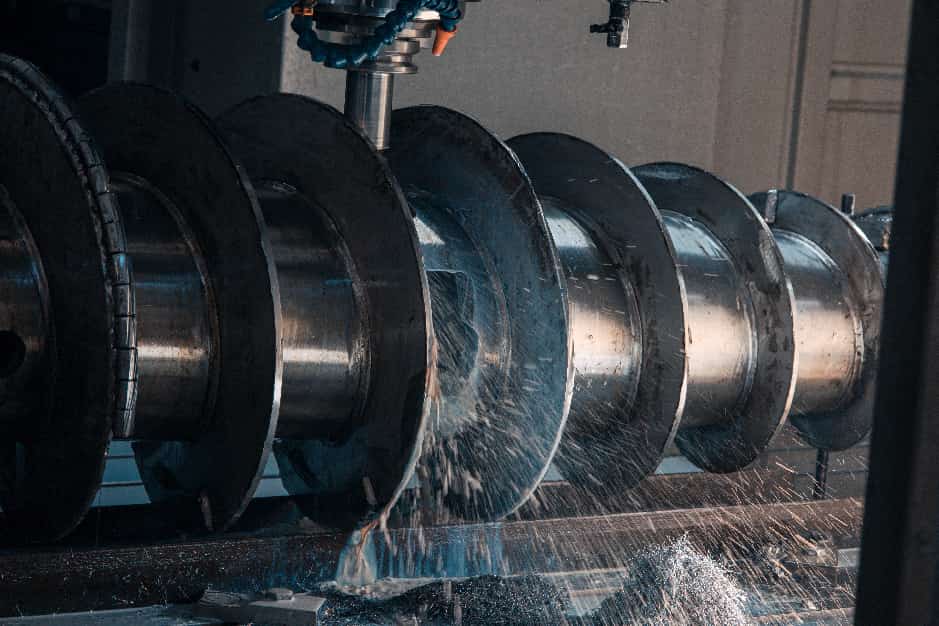
The decanter centrifuge machine features a compact structure, small footprint, easy installation and maintenance, stable operation, high throughput, and strong adaptability. Core components such as the bowl and screw can be made of different materials according to application requirements, for example, 304 stainless steel (good toughness), 316/316L duplex stainless steel (corrosion‑resistant), and 2205 duplex stainless steel. The differential speed can be adjusted stepwise or steplessly, and lubrication is simple. The equipment offers high safety with multiple protective mechanisms, including speed monitoring, vibration protection, motor overload/overheat protection, and screw zero‑differential protection. When handling high‑viscosity materials, a hydraulic differential gearbox can be used to enhance operational stability. For special working conditions, wear‑resistant and corrosion‑resistant designs are available – for example, in sludge treatment, the screw flights can be hard‑faced with tungsten carbide, equipped with ceramic inserts, or fitted with replaceable tungsten carbide wear blocks, providing three times better resistance to chloride corrosion compared to conventional stainless steel.
Application Fields of Decanter Centrifuge Machine
1. Chemical Industry
Petrochemicals: Used for oily sludge separation, achieving separation efficiency up to 95.5% and residual oil content as low as 0.2%–0.3%. Can also perform three‑phase separation of oil, water, and solids, with water content in the separated oil phase ≤3‰.
Fine chemicals: Used for dye suspension treatment and nano‑material purification.
Organic acid extraction: For example, in citric acid production, single‑stage extraction rate exceeds 90%, and product purity can reach 99.7%.
Also used for crude oil impurity removal, component separation in fertilizer and pesticide production, and other scenarios.
2. Environmental Protection
Core applications include kitchen waste dewatering, municipal sludge dewatering, and industrial sludge dewatering. Can reduce sludge moisture content from 98% to 80%, shrinking sludge volume by 90%. For example, the LW355 model decanter centrifuge handles 4–15 m³/h, with discharged cake solids content ≥25%.
Also used for separation of suspended solids and organics in wastewater treatment. Some integrated dewatering and drying systems can treat 150–600 tons of sludge per day.
3. Food Industry
Used for juice separation, protein separation, starch washing, classification, and dewatering. Throughput is three times higher than that of conventional hydrocyclones, washing water consumption is reduced by 15%, and the moisture content of wet starch after treatment is ≤40%.
In juice clarification, fruit pulp removal rate reaches 98.7%, and juice turbidity after treatment is <5 NTU.
Also applied in soybean and cereal protein dewatering, fish meal and fish meat dewatering, distiller's grains dewatering, and animal/vegetable oil separation and purification. Parts contacting materials must be made of food‑grade stainless steel, comply with relevant hygiene standards, and generally include online cleaning functions to prevent microbial growth.
4. Pharmaceutical Industry
Used in antibiotic separation, vaccine purification, and biological preparation. For example, in erythromycin fermentation broth treatment, a three‑stage countercurrent extraction system reduces solvent residue from 2.1% to 0.6%.
When processing vaccines at 25°C, activity retention exceeds 95%, meeting FDA cGMP requirements. In biological preparation treatment, residual DNA can be controlled to <0.1 ng/μg.
Equipment must meet GMP requirements, achieve complete material containment, and be equipped with comprehensive online cleaning systems. Related design, installation, operation, and performance validation must be completed.
5. Other Fields
Mining: Used for ore slurry classification, dewatering, and tailings treatment. Large‑capacity models handle 60–120 m³/h. Also applied in classification and dewatering of kaolin and graphite, as well as separation and classification of dyes and pigments.
Core Advantages of Decanter Centrifuge Machine
High throughput and efficiency
Single‑unit capacity is large, separation speed is high, footprint is small. Volume‑based treatment efficiency is much higher than that of plate‑and‑frame filter presses and belt filter presses.
Low cake moisture content, excellent dewatering performance
Strong centrifugal force field ensures thorough compression dewatering of sludge/waste residue, producing a drier cake with significant volume reduction, facilitating subsequent transport, stacking, or incineration.
No filter cloth consumables, low operating cost
No need to replace filter cloths or belts, reducing consumable, cleaning, and maintenance costs. Low failure rate and few wear parts.
Compact footprint, flexible installation
Horizontal, compact structure with low civil investment. Can be installed indoors or outdoors with simple supporting systems.
Strong adaptability, stable operation
Tolerant to fluctuations in feed concentration and materials with high impurity content. Resistant to shocks, stable operation. Capable of two‑phase (solid‑liquid) or three‑phase (solid‑liquid‑liquid) separation.
Environmentally friendly and low noise
Enclosed operation prevents leaks, spills, and secondary pollution. Can be equipped with vibration‑damping and noise‑reducing devices for low noise levels.
Key Selection Criteria for Decanter Centrifuge Machine
Selection is based on material characteristics, separation requirements, working conditions, equipment parameters, and supporting systems, evaluated from the following dimensions.
Step 1: Identify Basic Material Information (Most Critical)
Material type – sludge, chemical slurry, industrial wastewater, ore pulp, kitchen waste, hot pot base, starch, food, drilling mud, bottom tank oily sludge, livestock manure, farming wastewater, etc. – determines corrosion resistance material and explosion protection rating.
Feed solids content
Low solids (<3%): choose clarification‑type decanter with high L/D ratio
Medium solids (3%–15%): general sedimentation type
High solids (>15%): dewatering type with high conveying torque and shorter bowl
Solid particle size – finer particles require higher speed/separation factor, higher L/D ratio, smaller differential speed; coarse particles allow lower speed.
Density, viscosity, temperature, corrosivity – high corrosivity: choose 316L, 2205 duplex, titanium; ordinary wastewater: 304 stainless steel; high‑temperature materials require special seals and bearing cooling.
Step 2: Determine Process Objectives (Separation Requirements)
Throughput (m³/h): select based on actual peak flow, allowing 10%–20% margin.
Cake moisture content – municipal sludge: typically 60%–80%; chemical/mining slag: even lower, requiring higher speed, higher L/D ratio, and wear protection.
Clarity of centrate – whether centrate is reused or discharged to standard – determines L/D ratio and speed.
Separation mode – two‑phase solid‑liquid: conventional decanter; three‑phase solid‑liquid‑liquid: select three‑phase decanter.
Step 3: Core Structural Parameter Selection
Length‑to‑diameter ratio (L/D)
Clarification, fine particles, low moisture content: L/D = 4:1 to 5:1
High solids, easily settling materials: L/D = 3:1 to 4:1
Bowl diameter – larger diameter gives higher throughput and torque, but also larger footprint and higher energy consumption.
Speed and separation factor – ordinary sludge: separation factor 1500–2500; fine particles/difficult materials: 2500–3500+. The choice depends on the density difference between solid and liquid.
Differential gearbox and torque – smaller differential speed gives longer residence time and drier cake. High‑solids, easily clogging materials require a high‑torque differential to prevent stalling.
Screw flight protection – for abrasive conditions (mineral slag, sand): hard‑faced screw flights with tungsten carbide, ceramic wear tiles, or tungsten carbide blocks. For ordinary sludge: conventional wear coating is sufficient.
Step 4: Motor, Explosion Protection, and Sealing Configuration
Motor power – match throughput and material viscosity, with reserve margin.
Explosion protection rating – for flammable gases or solvent materials → Ex d II BT4/CT4 explosion‑proof motor.
Seal type – mechanical seal with nitrogen protection/flushing to prevent leakage and odor escape.
Vibration and noise reduction – spring dampers to reduce vibration noise and protect the foundation.
Step 5: Supporting System Selection
Feed pump – screw pump/diaphragm pump for stable, pulse‑free feeding.
Flocculant dosing system – sludge dewatering requires PAM dosing; select capacity matching the centrifuge throughput.
Control system – PLC fully automatic control, variable frequency drive for adjustable speed, differential speed, and feed rate.
Flushing system – online flushing with clean water/chemicals to prevent scaling and clogging.
Step 6: Working Conditions and Environmental Requirements
Continuous 24 h operation → prioritize heavy‑duty, high‑torque, stable models.
Indoor/outdoor installation, requirements for weather protection and corrosion protection.
Installation space, footprint, height limitations → choose horizontal compact models.
Precautions for Using Decanter Centrifuge Machine
When using a decanter centrifuge machine, install it on a stable and solid foundation and ensure good ventilation around it. Before starting, carefully check the condition of key components such as the bowl and screw conveyor, as well as the lubrication system. During operation, closely monitor the equipment status. If abnormal vibration, noise, or unusual temperature rise occurs, stop the machine immediately for inspection. Before feeding, complete material pretreatment to remove large impurities and foreign matter that could damage the equipment. Strict adherence to operating procedures ensures stable operation and extends service life.
Hot Tags: decanter centrifuge machine, China decanter centrifuge machine manufacturers, suppliers, factory