Application and Technical Advantage Analysis of Decanter Centrifuge in Wastewater Treatment
Working Principle and Mechanism
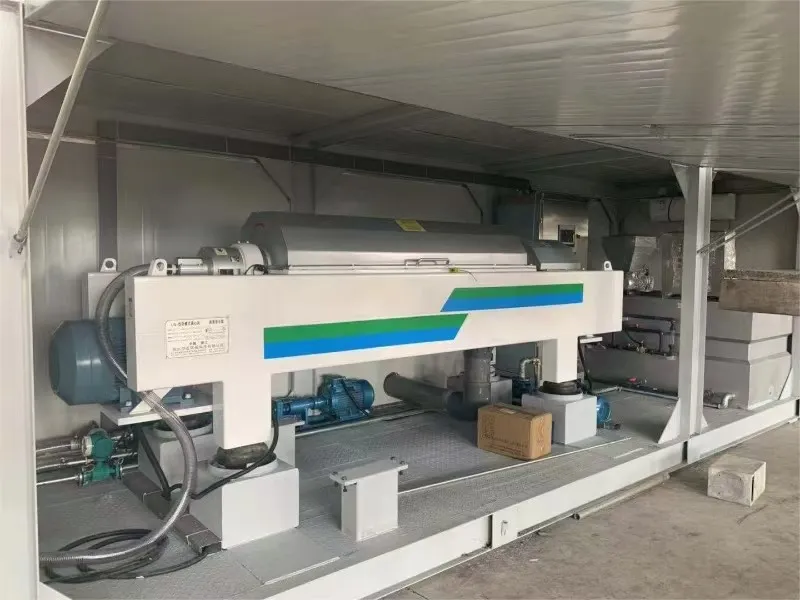
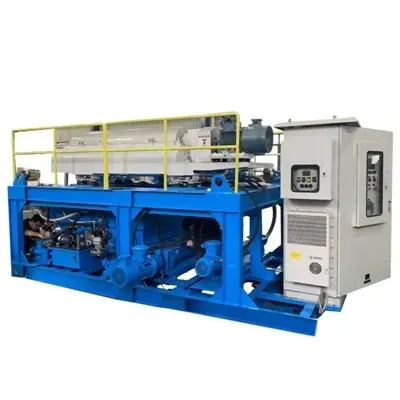
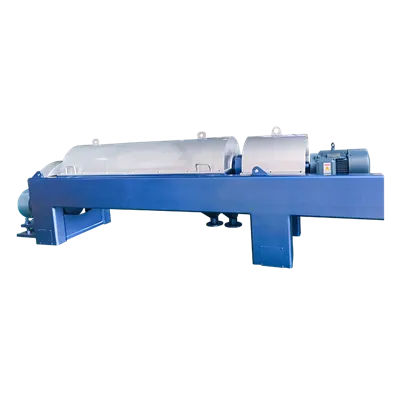
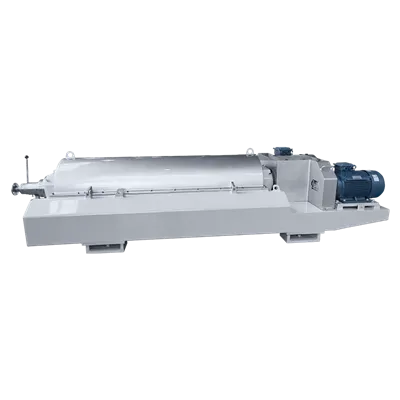
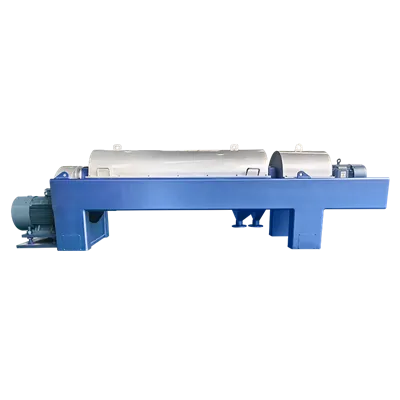
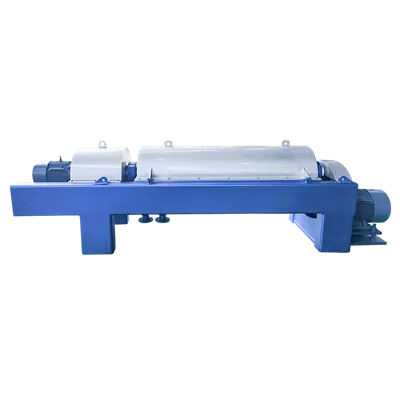
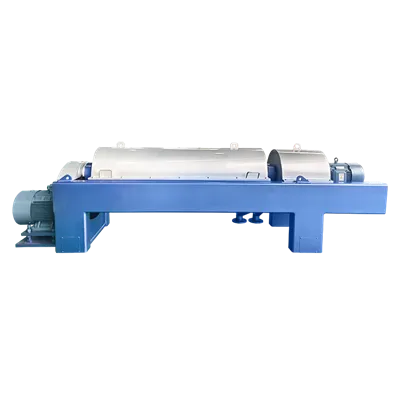
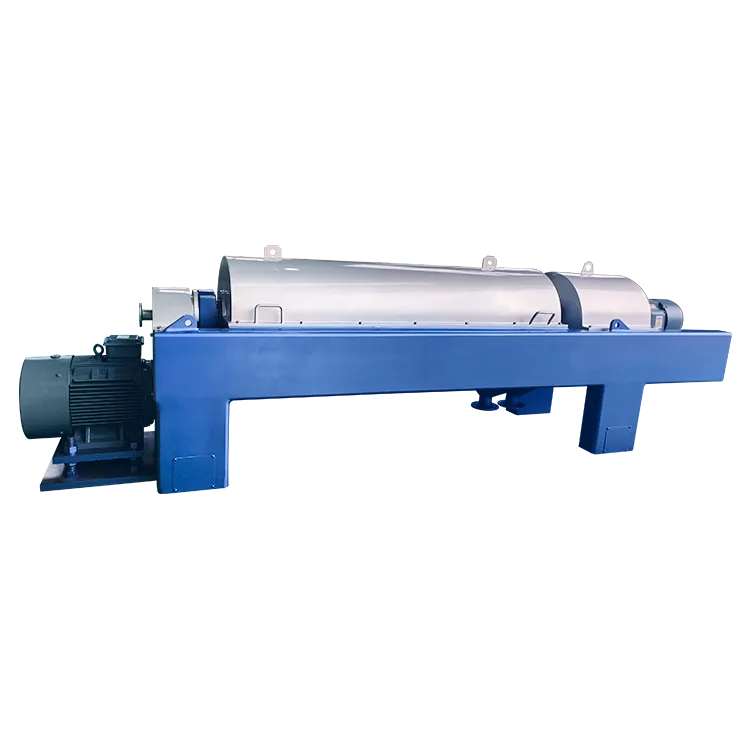
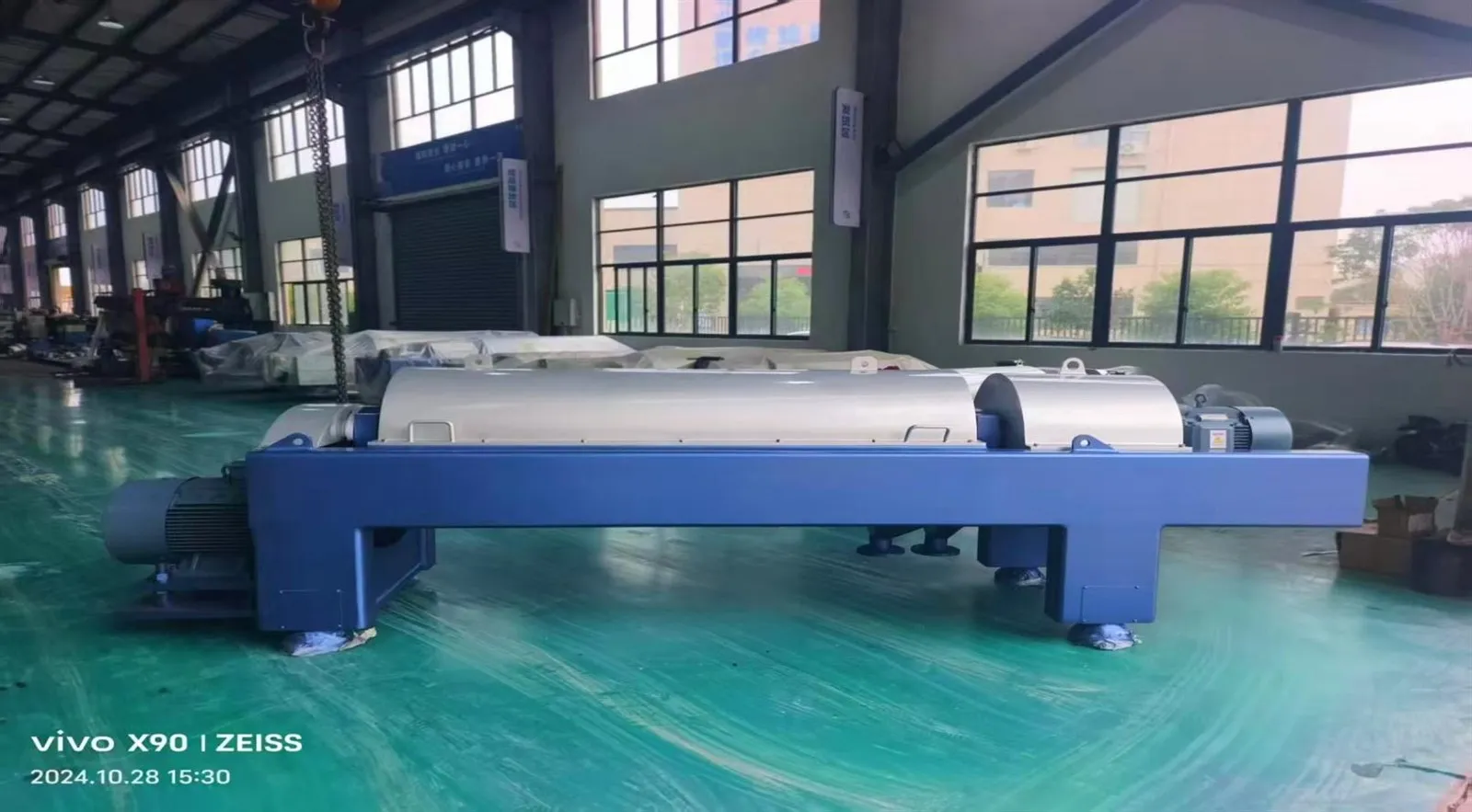
The decanter centrifuge for wastewater treatment is a high-efficiency separation device based on centrifugal sedimentation. Its core structure consists of a bowl, a screw conveyor, a differential gearbox, and a drive system. During operation, the bowl and the screw conveyor rotate at high speed in the same direction with a certain differential speed (typically 1000–5000 rpm). The wastewater to be treated enters the screw inner cylinder through the feed pipe. Under the centrifugal force field (centrifugal acceleration can reach 1000–4000 times gravity), solid particles with higher density quickly settle onto the inner wall of the bowl, forming a solids cake layer. The screw conveyor continuously pushes this cake toward the conical end of the bowl, where it is discharged through the solids outlet. The clarified liquid phase overflows from the large end of the bowl, achieving continuous solid-liquid separation.
Key Technical Parameters and Process Adaptability
Separation Factor (Fr)
The separation factor is the core parameter that determines the separation capacity of a decanter centrifuge for wastewater treatment, calculated as:
Fr = (ω² × R) / g
where ω is the angular velocity (rad/s), R is the bowl radius (m), and g is gravitational acceleration (m/s²). Depending on wastewater characteristics, the separation factor can be optimized by adjusting bowl diameter and rotational speed:
High‑concentration organic wastewater (e.g., municipal sludge, food processing wastewater): recommended Fr = 2000–3000 to ensure efficient settling of colloidal organics and activated sludge.
Industrial suspensions (e.g., chemical, mining wastewater): can be increased to Fr = 3000–4500 to enhance separation efficiency for high‑density particles such as heavy metal hydroxides and mineral residues.
Length‑to‑Diameter (L/D) Ratio
The L/D ratio directly affects the retention time and separation performance inside the centrifuge. Conventional models have an L/D ratio of 2.5–4.5. A larger L/D ratio generally provides higher separation precision:
Municipal wastewater treatment: L/D = 3.5–4.0, suitable for integrated sludge thickening and dewatering.
Fine chemical wastewater: L/D = 4.0–4.5, meets the requirement for deep separation of low‑concentration suspended solids (< 1%).
Differential Speed Control
By adjusting the speed difference between the bowl and the screw conveyor (typically 0.5%–3% of the bowl speed), the solids transport rate and dewatering efficiency can be balanced. High‑moisture materials require a smaller differential speed to extend dewatering time, while low‑moisture materials can use a larger differential speed to increase throughput.
Typical Applications in Wastewater Treatment
Municipal Wastewater Treatment
Sludge dewatering: As a core device for sludge treatment, the decanter centrifuge can reduce the moisture content of surplus sludge from 99.2%–99.5% down to 75%–85%, greatly reducing sludge volume (dewatered volume is only 1/10–1/20 of the original), thereby lowering subsequent transportation and disposal costs.
Primary sludge thickening: Replaces conventional gravity thickeners, increasing treatment efficiency by 3–5 times while reducing footprint by more than 60%.
Industrial Wastewater Treatment
Zero‑discharge of high‑salinity wastewater: The decanter centrifuge can pre‑treat and reduce suspended solids (SS) to < 10 mg/L, preventing membrane fouling. It also dewaters salt slurry before evaporation and crystallization, reducing the load on evaporators.
Oily wastewater separation: For oily wastewater from machining, oilfield produced water, etc., by adjusting the bowl cone angle (10°–15°) and differential speed, it achieves three‑phase separation of oil, water, and solids, with oil recovery rates over 95%.
Heavy metal wastewater treatment: In chemical precipitation processes, it dewaters hydroxide precipitates (e.g., Cr(OH)₃, Cu(OH)₂) to produce a cake with moisture content below 80%, facilitating heavy metal recovery or safe landfill.
Specialized Industrial Wastewater Treatment
Pharmaceutical wastewater: Separates mycelium and drug residues from fermentation broths and extraction waste liquids, achieving solid recovery > 99% and liquid clarity as low as < 5 NTU.
Food processing wastewater: Treats high‑protein organic wastewater from slaughterhouses and starch processing, effectively separating meat residues and starch granules, reducing the load on subsequent biological treatment.
Technical Advantages and Performance Comparison
Compared with traditional separation equipment such as plate‑and‑frame filter presses and belt filter presses, the decanter centrifuge for wastewater treatment offers the following core advantages:
Efficient and continuous operation
Fully automatic, enclosed operation allows 24/7 continuous feeding, separation, and solids discharge. Capacity ranges from 0.5 to 100 m³/h, suitable for large‑scale wastewater treatment. Conventional filter presses require periodic start‑stop cycles, and their treatment efficiency is only 30%–50% that of the decanter centrifuge.
01
Excellent separation performance
Under high centrifugal force, separation efficiency for particles ≥ 2 μm exceeds 98%, and effluent SS is typically < 50 mg/L. In contrast, belt filter presses have poor removal efficiency for fine particles (< 10 μm), often yielding effluent SS > 100 mg/L.
02
Compact footprint
The floor space required by a single decanter centrifuge is only 1/5–1/3 that of conventional thickening + dewatering processes, making it ideal for space‑limited municipal or industrial projects.
03
Controllable operating cost
Energy consumption: Approximately 0.5–1.5 kW·h per cubic meter of treated water, lower than that of centrifuge dewatering units (1.2–2.0 kW·h/m³).
Chemical consumption: Polymer flocculant dosage is only 60%–80% of that used in belt filter presses, reducing chemical costs.
04
Easy operation and maintenance
The decanter centrifuge is equipped with a PLC automatic control system that monitors key parameters such as bowl speed, differential speed, and torque in real time, enabling remote control and fault alerts. Wear parts (e.g., wear‑resistant liners on screw flights) are made of high‑chromium cast iron or ceramic materials, with a service life of 8,000–12,000 hours.
05
Intelligent and Future Developments
Intelligent feed control
By using online concentration sensors and variable frequency drive systems, the feed rate and flocculant dosage can be dynamically matched, achieving fully automatic operation of the entire treatment process.
Structural optimization
Features such as dual‑cone‑angle bowls and anti‑clogging designs for screw flights improve adaptability to complex feed materials.
Energy‑saving technologies
The use of permanent magnet synchronous motors and variable frequency control systems reduces energy consumption by 15%–20%.
Conclusion
With its high efficiency, continuous operation, and compact design, the decanter centrifuge for wastewater treatment has become a core solid‑liquid separation device in modern wastewater treatment systems. It demonstrates irreplaceable advantages especially in municipal sludge dewatering, high‑strength industrial wastewater treatment, and special separation applications. As intelligent and energy‑saving technologies continue to evolve, its role in wastewater resource recovery and zero‑discharge processes will further expand, providing critical technical support for water pollution control.
Note: Specific centrifuge selection should be based on wastewater characteristics (SS concentration, particle size distribution, pH), treatment capacity, and effluent quality requirements. Pilot tests are recommended to determine the optimal operating parameters.
Hot Tags: centrifuge wastewater treatment, China centrifuge wastewater treatment manufacturers, suppliers, factory