1. Overview and Specifications
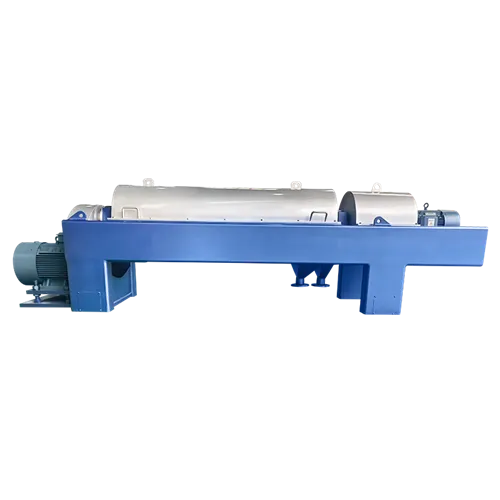
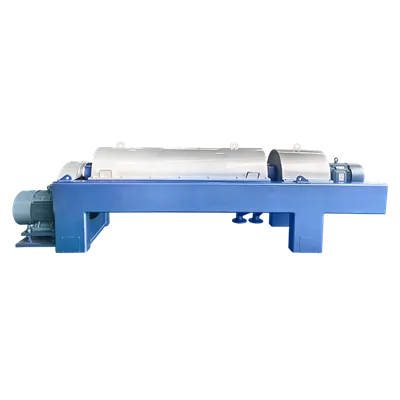
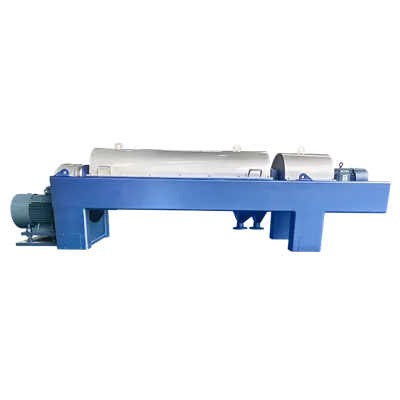
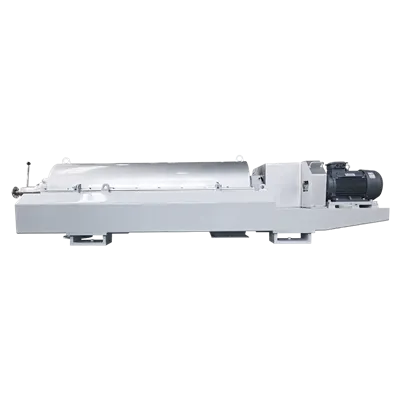
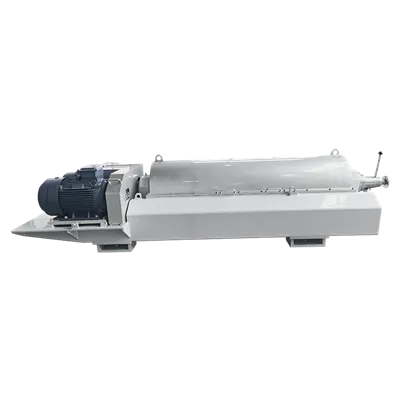
The LW series sludge decanter centrifuge separates solids from liquid sludge through differential-speed rotation between the bowl and the internal screw conveyor. Bowl and screw rotate in the same direction at a controlled speed difference of 5–30 rpm; solids settle against the bowl wall under centrifugal force and are conveyed to the discharge port by the screw, while clarified liquid exits through adjustable overflow ports at the opposite end
|
Parameter |
Range |
|
Drum diameter |
250 – 1000 mm |
|
Throughput |
1 – 120 m³/h |
|
Main motor power |
11 – 250 kW |
|
Differential speed |
5 – 30 rpm |
|
Configuration |
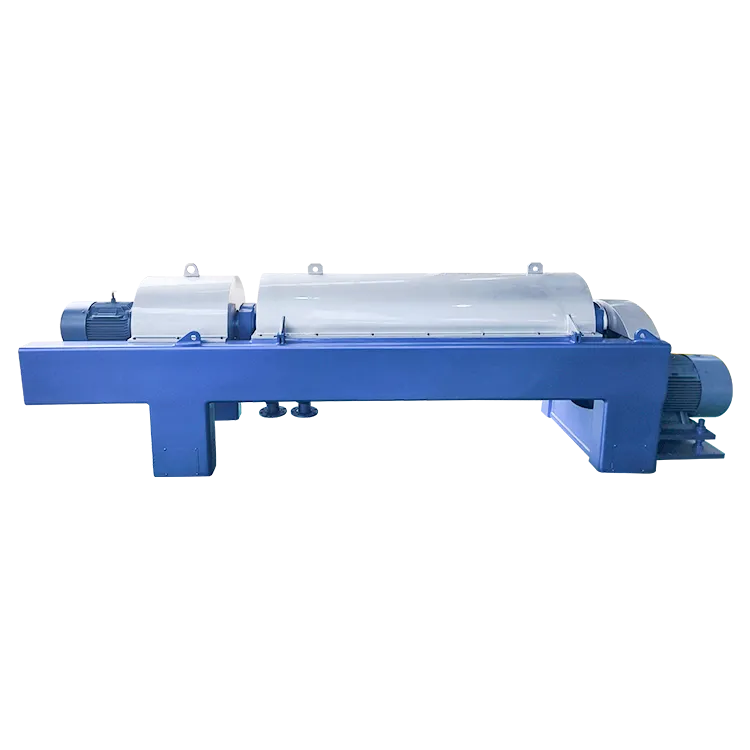
A-type (in-line motor) / B-type (side-mounted motor) |
Eleven standard models cover this range. Differential mechanisms are planetary gear or cycloidal gear, depending on model.
2. Construction and Materials
The bowl is centrifugally cast from AISI 304, AISI 316, or duplex stainless steel, with trace molybdenum added to increase strength and wear resistance. Screw flight, feed pipe, liquid outlet, and casing are stainless steel throughout at every point of contact with the process material.
Wear protection is applied at five zones, selected by the abrasiveness and corrosivity of the feed: screw flight, screw discharge port, bowl outer wall (scraper zone), solids discharge port, and seal mounting area. Tungsten carbide (grades YG6, YG8, and modified tungsten-cobalt alloys, hardness 89–93 HRA) is applied by spray coating or tile insert; ceramic liners are used where feed pH or particle hardness calls for it. Bearings are thrust ball type; sealing combines skeleton oil seals with labyrinth seals. Bowl geometry uses a large aspect ratio and large cone angle to extend solids retention time in the settling zone.

3. Drive and Control System
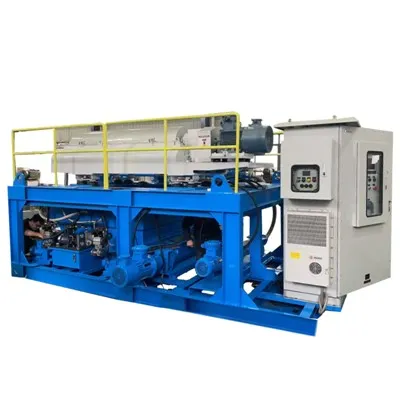
sludge decanter centrifuge on two motors - a main drive motor and a differential motor - both frequency-controlled and electronically synchronized to hold the set differential speed as feed load varies. Pool depth inside the bowl is adjustable online through a centripetal pump and eccentric-wheel mechanism, without stopping the machine, which matters where feed concentration shifts during a production run.
Standard control is a touch-screen electrical cabinet with programmable start-up, feed, and shutdown sequencing. Units can be integrated into a central control room for remote monitoring and data logging.
4. System Integration and Operating Parameters
A complete dewatering line built around the centrifuge includes a feed system, a flocculant (PAM) dosing system, the centrifuge, a solids discharge conveyor (screw or shaftless type), and the electrical control system.
Feed conditions the unit is built for: solid particle diameter ≥2 μm, feed weight concentration ≤10% (3–5% gives the best separation result), volume concentration ≤70%, liquid–solid density difference ≥0.05 g/cm³. PAM dosing concentration typically runs 0.5–2%, adjusted to sludge characteristics.
5. Applications
LW series units are installed in municipal wastewater treatment, industrial wastewater treatment, chemical processing, pharmaceutical manufacturing, mining, printing and dyeing, brewing, and slaughterhouse wastewater lines - any process generating a solid-liquid sludge stream that needs continuous dewatering.
6. Configuration and Customization

Bowl length, screw pitch, wear-protection material, and motor sizing are all adjusted before manufacturing according to the feed characteristics, throughput target, and installation site. The frame and base ship as a single welded steel structure and are installed without foundation bolts.
Hot Tags: sludge decanter centrifuge, China sludge decanter centrifuge manufacturers, suppliers, factory, centrifuge dewatering, centrifuge sludge dewatering, dewatering centrifuge operation, Mobile Sludge Dewatering, sludge centrifuge machine, wastewater centrifuge dewatering