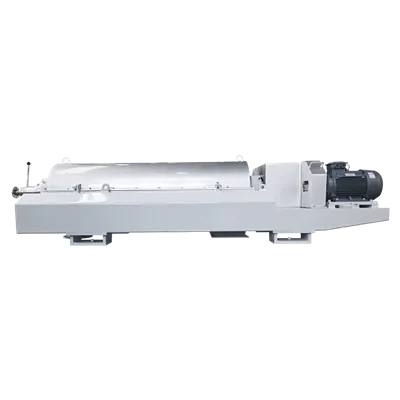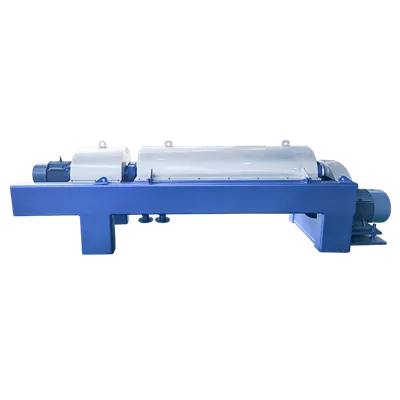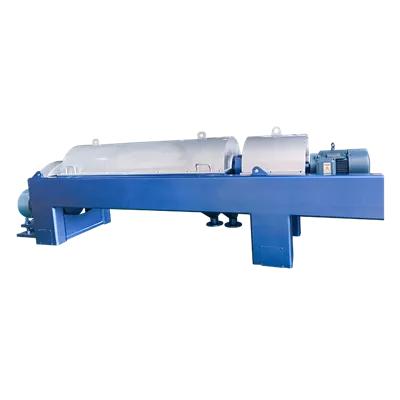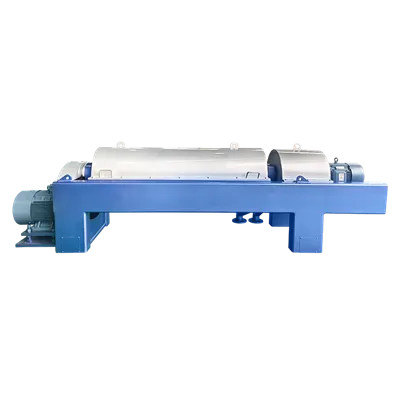

The Oily Waste Residue Dewatering Decanter Centrifuge is a heavy-duty, continuous horizontal solid-liquid-liquid separation machine engineered specifically for processing industrial oily sludges and stable emulsions. Designed for harsh petrochemical and environmental applications, this 3-phase decanter centrifuge simultaneously separates heavy oils, water, and abrasive solid residues, recovering valuable hydrocarbons while reducing waste volume to meet strict environmental disposal limits.
Key Features
High G-Force Separation: Generates up to 3,000×g centrifugal force to break stable oil-water emulsions and sediment fine colloidal particles.
Tungsten Carbide Armor: Scroll conveyor flights are protected with tungsten carbide tiles or high-abrasion spray-welded coatings designed to endure 15,000 to 25,000 operating hours (depending on quartz and silica abrasiveness), with clear maintenance intervals for critical wear components.
Corrosion-Resistant Metallurgy: Wetted parts fabricated from solid AISI 316L or SAF 2205 duplex stainless steel to resist chlorides, hydrocarbons, and acidic waste streams.
VFD Dual-Motor Drive: Independent bowl and scroll variable frequency drives automatically adjust differential speed based on real-time torque fluctuations.
Vapor-Tight Enclosure: Inert gas purging compatibility prevents hydrocarbon vapor emissions during the processing of volatile industrial residues.
Heavy-Duty Bearing Architecture: Equipped with high-precision industrial bearings engineered for a nominal L10h bearing life exceeding 50,000 hours under standard operating conditions.
Technical Specifications
|
Model |
Bowl Diameter (mm) |
Max Bowl Speed (RPM) |
Max G-Force (×g) |
Processing Capacity () |
Installed Power (kW) |
|
LW-350 |
350 |
4,000 |
3,100 |
2 – 5 |
18.5 – 22 |
|
LW-450 |
450 |
3,200 |
2,600 |
5 – 12 |
37 – 45 |
|
LW-550 |
550 |
2,800 |
2,400 |
10 – 25 |
75 – 90 |
|
LW-650 |
650 |
2,400 |
2,100 |
20 – 45 |
110 – 132 |
Separation Performance
|
Solid Recovery Rate |
≥ 95% (for suspended particles > 5 μm). |
|
Dry Cake Moisture |
15% - 30% (depending on feed sludge composition). |
|
Recovered Oil Clarity |
Free oil sediment content < 1%. |
|
Continuous Duty Cycle |
Built for 24/7 continuous operation featuring automated Clean-in-Place (CIP) flushing connections. |
Suitable Materials & Applications
Refinery Tank Bottom Sludge: Extraction of heavy hydrocarbons, water, and sand from crude oil storage tank cleanouts.
Petrochemical Slop Oil Dewatering: Recovery of reusable oil from API separator sludge, DAF floats, and drainage pits.
Drilling Waste Processing: Dewatering water-based and synthetic oil-based drilling mud residues.
Metalworking Coolant Treatment: Separation of tramp oil and grinding swarf mixtures.
Wetted Materials: Standard SS316L; Optional Alloy 20, Hastelloy, or Titanium for severe chemical environments.
Equipment Configuration & Manufacturing Standards
Rotating Assembly: Centrifugally cast stainless steel bowl and forged steel shaft assemblies, dynamically balanced on high-speed balancing rigs to ISO 1940 Grade G2.5 standards.
Gearbox: Heavy-duty planetary gearbox delivering high torque transmission ratios for continuous scroll conveyance.
Bearings & Lubrication: SKF or FAG high-precision industrial bearings coupled with automated grease or circulating oil lubrication systems.
Control Panel: Industrial PLC architecture with HMI touch screen, integrated VFD inverters, vibration sensors, and torque overload feedback loops.
Machining Precision: Processed on CNC horizontal boring mills to maintain tight tolerances and ensure mechanical stability under high centrifugal loads.
Customization Options
Pre-Treatment Skids: Inline chemical polymer dosing units and sludge pre-heater heat exchangers.
Discharge Systems: Enclosed cake conveyor connections and closed-loop oil collection manifolds.
Hazardous Area Compliance: Available with ATEX / IECEx Zone 1 / Zone 2 or North American Class I, Division 1 / Division 2 explosion-proof electrical packages for classified plant locations.
Quality Control & Testing
Material Traceability: Mill test certificates (MTC EN 10204 3.1) supplied for all wetted pressure-retaining components.
Non-Destructive Testing (NDT): Critical weld seams undergo 100% radiographic (RT) or ultrasonic (UT) inspection, combined with liquid dye penetrant (PT) testing.
Factory Acceptance Testing (FAT): Every decanter centrifuge undergoes a 4-hour mechanical run test, bearing temperature monitoring, and vibration analysis prior to factory dispatch.
Compliance Standards: Manufactured under ISO 9001 quality management systems and certified to CE machinery directives.
Installation & After-Sales Support
Commissioning Support: On-site installation supervision, mechanical alignment, and operational training by experienced factory field service engineers.
Spare Parts Logistics: Critical wear components (gaskets, mechanical seals, bearings, and tungsten carbide tiles) stocked for immediate global dispatch.
Remote Diagnostics: Optional IoT remote telemetry module for operational data logging and preventive maintenance alerts.
Frequently Asked Questions
Request a Quote
To configure the correct oily waste residue dewatering decanter for your project specifications, please include the following technical parameters in your inquiry:
1.Source and description of the oily waste (e.g., tank bottom sludge, slop oil, drill cuttings)
2.Required design processing capacity (m³/h or t/h)
3.Feed solid concentration (%) and physical particle size distribution
4.Operating temperature and chemical profile (e.g., presence of H₂S or high chlorides)
5.Electrical hazardous area classification (Safe area vs. ATEX / Class I Div 1/2)
Submit Technical Inquiry & Request RFQ
Hot Tags: oily waste residue dewatering decanter, China oily waste residue dewatering decanter manufacturers, suppliers, factory, Continuous Operation Heavy Duty Decanter Centrifuge, Explosion Protected High Solids Sludge Dewatering Centrifuge, Industrial-Grade Solid Liquid Separation Decanter Centrifuge, PLC Controlled Solid Liquid Separation Decanter Centrifuge, Skid Mounted Industrial Three Phase Decanter Centrifuge, Skid Mounted Two Phase Decanter Centrifuge